Invest
Australia’s top state economy leads for eighth quarter in a row
The best-performing economy ranked first in retail spending, relative unemployment and other measures.
Australia’s top state economy leads for eighth quarter in a row
The best-performing economy ranked first in retail spending, relative unemployment and other measures.
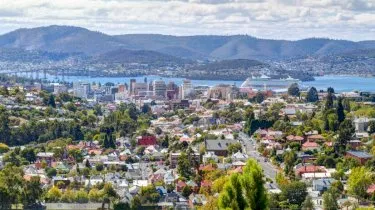
Tasmania has been named the best-performing economy in the country for the eighth quarter in a row as part of CommSec’s State of the States report.
The state led the rest of the country in four out of eight economic indicators, including retail spending, relative unemployment, equipment investment and dwelling starts, and ranked second on construction work done and relative economic growth.
South Australia took the second position overall, ranking second on the measures of equipment investment and relative unemployment, while Victoria took third, ranking first on construction work done and second on housing finance and dwelling starts.
“Australia’s state and territory economies are in solid shape, well supported by strong fiscal and monetary stimulus,” said CommSec chief economist Craig James.
“Unemployment rates are historically-low across much of the nation. Labour is in short supply across many industries – a reflection of current COVID-related self-isolation requirements and border restrictions.”
Western Australia took fourth place, ranking first on relative economic growth and second on relative population growth, and was followed in the rankings by Queensland, NSW, the ACT and the Northern Territory.
Outside of Tasmania’s lead, Mr James said there was little separating the performance of the other state and territory economies.
“Lockdowns have weighed on the economic performances of NSW and the ACT in the last survey,” he said.
“While both of these economies could scale the rankings again, new challenges are presented by COVID-19 restrictions and the resulting labour shortages – not just for NSW and the ACT, but for all economies. Meanwhile, the opening of domestic and international borders is also likely to further support the Queensland economy.”
Commenting on the findings of the report, Tasmanian Premier Peter Gutwein said that it represented “fantastic news” for the state.
“There is no doubt our economy entered the pandemic in a position of strength, and we worked hard to maintain this throughout the pandemic,” he said.
“We will continue to support Tasmanians, our businesses and our community to maintain this momentum as we continue through this transition phase and learn to live with COVID.”
While Tasmania will likely remain on top of the rankings in the short-term, according to Mr James, he noted that change might be in store over the rest of the year, particularly with Western Australia and South Australia rising up the rankings.
“Ahead, the country will continue to face challenges managing the latest Omicron wave with infrastructure spending continuing to be a key driver of growth in 2022,” Mr James said.
“In differing ways, each state or territory will attempt to ‘live with COVID’ throughout 2022, potentially leading to major changes in the performance rankings.”

Economy
Australia’s inflation cools to 3.4% — why the RBA’s next move still isn’t a lay‑up for business
Headline inflation easing is good optics; balance sheets feel something different. With year‑on‑year CPI down to 3.4% in November from 3.8%, hopes for rate relief are rising — but policymakers remain ...Read more
Economy
Inflation cools to 3.4% — but the RBA’s reaction function keeps businesses on a knife-edge
Australia’s headline CPI edged down to 3.4% year-on-year in November, from 3.8%, easing immediate pressure but not eliminating the risk of further tightening. With services inflation sticky and ...Read more
Economy
Higher-for-longer, not higher forever: How Australia’s inflation ‘surprise’ is rewriting CFO playbooks for 2026
Australia’s latest inflation pulse eased but didn’t budge bank outlooks: near‑term rate cuts are still a long shot, with some houses flagging upside risk. That steadier‑for‑longer cash rate is pushing ...Read more
Economy
Australia's inflation illusion: the real challenge lies in pricing power and productivity
Headline inflation has cooled to 3.4% year-on-year, but the Reserve Bank’s caution—and a still‑hot housing backdrop—mean the rate threat hasn’t left the room. For boards, the next few quarters are ...Read more
Economy
When house prices lift, tills ring: A case study in turning Australia’s wealth effect into growth
Australia’s latest upswing in household wealth, anchored by higher dwelling values, is more than a feel‑good statistic—it is a profit and planning signal. The ABS notes property’s centrality to ...Read more
Economy
RBA's hawkish stance reflects inflation concerns, State Street economist comments
In a recent statement, the Reserve Bank of Australia (RBA) has signaled a hawkish stance on interest rates, drawing insights from financial experts about the implications for Australia's economic ...Read more
Economy
Navigating the inflation maze: How CFOs can outsmart economic hurdles in Australia
Fresh inflation data have cooled expectations of near-term rate cuts in Australia, intensifying pressure on margins, capital allocation and demand. Rather than wait for monetary relief that may not ...Read more
Economy
Inflation concerns rise as Australia's CPI climbs to 3.8% in October
Australia's latest Consumer Price Index (CPI) figures have sent ripples through the economy, with headline inflation accelerating to 3.8% year-on-year in October, up from 3.6% in September. The data, ...Read more
Economy
Australia’s inflation cools to 3.4% — why the RBA’s next move still isn’t a lay‑up for business
Headline inflation easing is good optics; balance sheets feel something different. With year‑on‑year CPI down to 3.4% in November from 3.8%, hopes for rate relief are rising — but policymakers remain ...Read more
Economy
Inflation cools to 3.4% — but the RBA’s reaction function keeps businesses on a knife-edge
Australia’s headline CPI edged down to 3.4% year-on-year in November, from 3.8%, easing immediate pressure but not eliminating the risk of further tightening. With services inflation sticky and ...Read more
Economy
Higher-for-longer, not higher forever: How Australia’s inflation ‘surprise’ is rewriting CFO playbooks for 2026
Australia’s latest inflation pulse eased but didn’t budge bank outlooks: near‑term rate cuts are still a long shot, with some houses flagging upside risk. That steadier‑for‑longer cash rate is pushing ...Read more
Economy
Australia's inflation illusion: the real challenge lies in pricing power and productivity
Headline inflation has cooled to 3.4% year-on-year, but the Reserve Bank’s caution—and a still‑hot housing backdrop—mean the rate threat hasn’t left the room. For boards, the next few quarters are ...Read more
Economy
When house prices lift, tills ring: A case study in turning Australia’s wealth effect into growth
Australia’s latest upswing in household wealth, anchored by higher dwelling values, is more than a feel‑good statistic—it is a profit and planning signal. The ABS notes property’s centrality to ...Read more
Economy
RBA's hawkish stance reflects inflation concerns, State Street economist comments
In a recent statement, the Reserve Bank of Australia (RBA) has signaled a hawkish stance on interest rates, drawing insights from financial experts about the implications for Australia's economic ...Read more
Economy
Navigating the inflation maze: How CFOs can outsmart economic hurdles in Australia
Fresh inflation data have cooled expectations of near-term rate cuts in Australia, intensifying pressure on margins, capital allocation and demand. Rather than wait for monetary relief that may not ...Read more
Economy
Inflation concerns rise as Australia's CPI climbs to 3.8% in October
Australia's latest Consumer Price Index (CPI) figures have sent ripples through the economy, with headline inflation accelerating to 3.8% year-on-year in October, up from 3.6% in September. The data, ...Read more