


Invest
Residential building faring better than expected, but good times not predicted to last
Invest
Residential building faring better than expected, but good times not predicted to last
Data from the ABS released yesterday indicates new home building slid back during the September quarter but was still significantly higher than at the same time last year.
Residential building faring better than expected, but good times not predicted to last
Data from the ABS released yesterday indicates new home building slid back during the September quarter but was still significantly higher than at the same time last year.
According to the figures on Construction Work Done, new residential building dropped by 1.8 per cent throughout the quarter but saw an improvement of 4.7 per cent on a year earlier.
Such findings corroborate those of Master Builders Australia’s recent National Survey of Building and Construction, which found residential building activity fell by 4.8 index points in the September quarter, while industry optimism towards future builds also dropped by 1.9 per cent.
“New home building held up well during the September 2018 quarter despite the tougher market conditions,” Master Builders Australia chief economist Shane Garrett said.
“Surprisingly, the apartment/unit side of the market put in a strong performance and came close to surpassing its busiest quarter on record.”
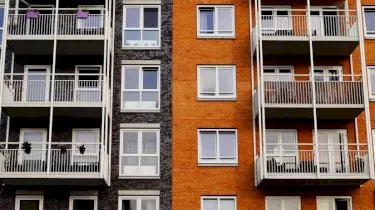
The high rate of new apartment builds was highlighted last week in ABS data commissioned by CommSec.
According to the stockbroking firm’s Home Size Trends Report, the average new home built over the past year is 186.3 square metres, the smallest since 1996.
CommSec chief economist Craig James said this was indicative of increased demand for apartments.
“With the average number of people in homes falling and population rising, there is a need for a greater number of smaller homes to be built. There are still few concerns about broader or localised housing oversupply,” he said.
The ABS data also found that work on detached houses fell by a considerable 3.2 per cent compared with the previous quarter.
According to CommSec’s previous report, NSW may be a key contributor to this substantial drop, as the number of new stand-alone homes built in the state decreased to just 43 per cent in 2017-18.
“The performance of residential building has proven more resilient than expected in light of the unfolding credit crunch and less favourable conditions in Australia’s largest housing markets,” Mr Garrett said.
Echoing the sentiments reflected in Master Builder’s earlier survey, Mr Garrett said he does not expect the building market to continue its rally against tougher market conditions.
“Going forward, we do expect the tougher financial environment to take its toll on the volume of new home building over the next few years. Larger apartment projects will probably see the biggest reduction,” he said.
He called on the federal government to hand down support for the building industry in the upcoming budget, to ensure residential building supply can continue to meet demand.
“With the federal budget set be delivered earlier next year, it is important that it includes measures to support our sector’s capacity to meet the building needs of a steadily growing population.”
Property
Multigenerational living is moving mainstream: how agents, developers and lenders can monetise the shift
Australia’s quiet housing revolution is no longer a niche lifestyle choice; it’s a structural shift in demand that will reward property businesses prepared to redesign product, pricing and ...Read more
Property
Prestige property, precision choice: a case study in selecting the right agent when millions are at stake
In Australia’s top-tier housing market, the wrong agent choice can quietly erase six figures from a sale. Privacy protocols, discreet buyer networks and data-savvy marketing have become the new ...Read more
Property
From ‘ugly’ to alpha: Turning outdated Australian homes into high‑yield assets
In a tight listings market, outdated properties aren’t dead weight—they’re mispriced optionality. Agencies and vendors that industrialise light‑touch refurbishment, behavioural marketing and ...Read more
Property
The 2026 Investor Playbook: Rental Tailwinds, City Divergence and the Tech-Led Operations Advantage
Rental income looks set to do the heavy lifting for investors in 2026, but not every capital city will move in lockstep. Industry veteran John McGrath tips a stronger rental year and a Melbourne ...Read more
Property
Prestige property, precision choice: Data, discretion and regulation now decide million‑dollar outcomes
In Australia’s prestige housing market, the selling agent is no longer a mere intermediary but a strategic supplier whose choices can shift outcomes by seven figures. The differentiators are no longer ...Read more
Property
The new battleground in housing: how first-home buyer policy is reshaping Australia’s entry-level market
Government-backed guarantees and stamp duty concessions have pushed fresh demand into the bottom of Australia’s price ladder, lifting values and compressing selling times in entry-level segmentsRead more
Property
Property 2026: Why measured moves will beat the market
In 2026, Australian property success will be won by investors who privilege resilience over velocity. The market is fragmenting by suburb and asset type, financing conditions remain tight, and ...Read more
Property
Entry-level property is winning: How first home buyer programs are reshaping demand, pricing power and strategy
Lower-priced homes are appreciating faster as government support channels demand into the entry tier. For developers, lenders and marketers, this is not a blip—it’s a structural reweighting of demand ...Read more
Property
Multigenerational living is moving mainstream: how agents, developers and lenders can monetise the shift
Australia’s quiet housing revolution is no longer a niche lifestyle choice; it’s a structural shift in demand that will reward property businesses prepared to redesign product, pricing and ...Read more
Property
Prestige property, precision choice: a case study in selecting the right agent when millions are at stake
In Australia’s top-tier housing market, the wrong agent choice can quietly erase six figures from a sale. Privacy protocols, discreet buyer networks and data-savvy marketing have become the new ...Read more
Property
From ‘ugly’ to alpha: Turning outdated Australian homes into high‑yield assets
In a tight listings market, outdated properties aren’t dead weight—they’re mispriced optionality. Agencies and vendors that industrialise light‑touch refurbishment, behavioural marketing and ...Read more
Property
The 2026 Investor Playbook: Rental Tailwinds, City Divergence and the Tech-Led Operations Advantage
Rental income looks set to do the heavy lifting for investors in 2026, but not every capital city will move in lockstep. Industry veteran John McGrath tips a stronger rental year and a Melbourne ...Read more
Property
Prestige property, precision choice: Data, discretion and regulation now decide million‑dollar outcomes
In Australia’s prestige housing market, the selling agent is no longer a mere intermediary but a strategic supplier whose choices can shift outcomes by seven figures. The differentiators are no longer ...Read more
Property
The new battleground in housing: how first-home buyer policy is reshaping Australia’s entry-level market
Government-backed guarantees and stamp duty concessions have pushed fresh demand into the bottom of Australia’s price ladder, lifting values and compressing selling times in entry-level segmentsRead more
Property
Property 2026: Why measured moves will beat the market
In 2026, Australian property success will be won by investors who privilege resilience over velocity. The market is fragmenting by suburb and asset type, financing conditions remain tight, and ...Read more
Property
Entry-level property is winning: How first home buyer programs are reshaping demand, pricing power and strategy
Lower-priced homes are appreciating faster as government support channels demand into the entry tier. For developers, lenders and marketers, this is not a blip—it’s a structural reweighting of demand ...Read more





