Invest
Victoria’s lockdown to stunt economic recovery
The stage 4 lockdown measures in Victoria will limit a quarter of Australia’s national output and weaken its near-term growth prospects, an economist has warned.
Victoria’s lockdown to stunt economic recovery
The stage 4 lockdown measures in Victoria will limit a quarter of Australia’s national output and weaken its near-term growth prospects, an economist has warned.
Victorian Premier Daniel Andrews highlighted some significant changes as the country enters stage 4 lockdowns, with BIS Oxford Economics believing the nation’s growth will go on pause because of it.
Group one, Mr Andrews announced, are stores exempted from the closures announced on Monday, 3 August. These include supermarkets, grocery food and liquor stores, petrol stations, pharmacies, post offices, specialist stationery services for business use, disability and health equipment, maternity supplies, motor vehicle parts for emergency repairs for agricultural retailers, and locksmiths.
Group two are businesses set to close for a period of six weeks. These include retail stores, some manufacturing facilities and admin businesses, which will be expected to shut from 11.59pm, Wednesday, 5 August. This includes retailers like Bunnings, Mr Andrews said, which will only be able to work on-site for the purposes of fulfilling online orders.
“Retail will look very different than it’s looked,” said Mr Andrews.

“It’s critically important to have many people at home rather than at work and moving to and from work each and every day.”
Included in the closures are personal care businesses, encompassing hairdressers, car washers and photographic film processors, as well as creative and performing arts activities.
Also among the businesses closed for on-site work are legal and accounting services; management and related consulting services; architectural, engineering and technical services; employment services; and office administrative services.
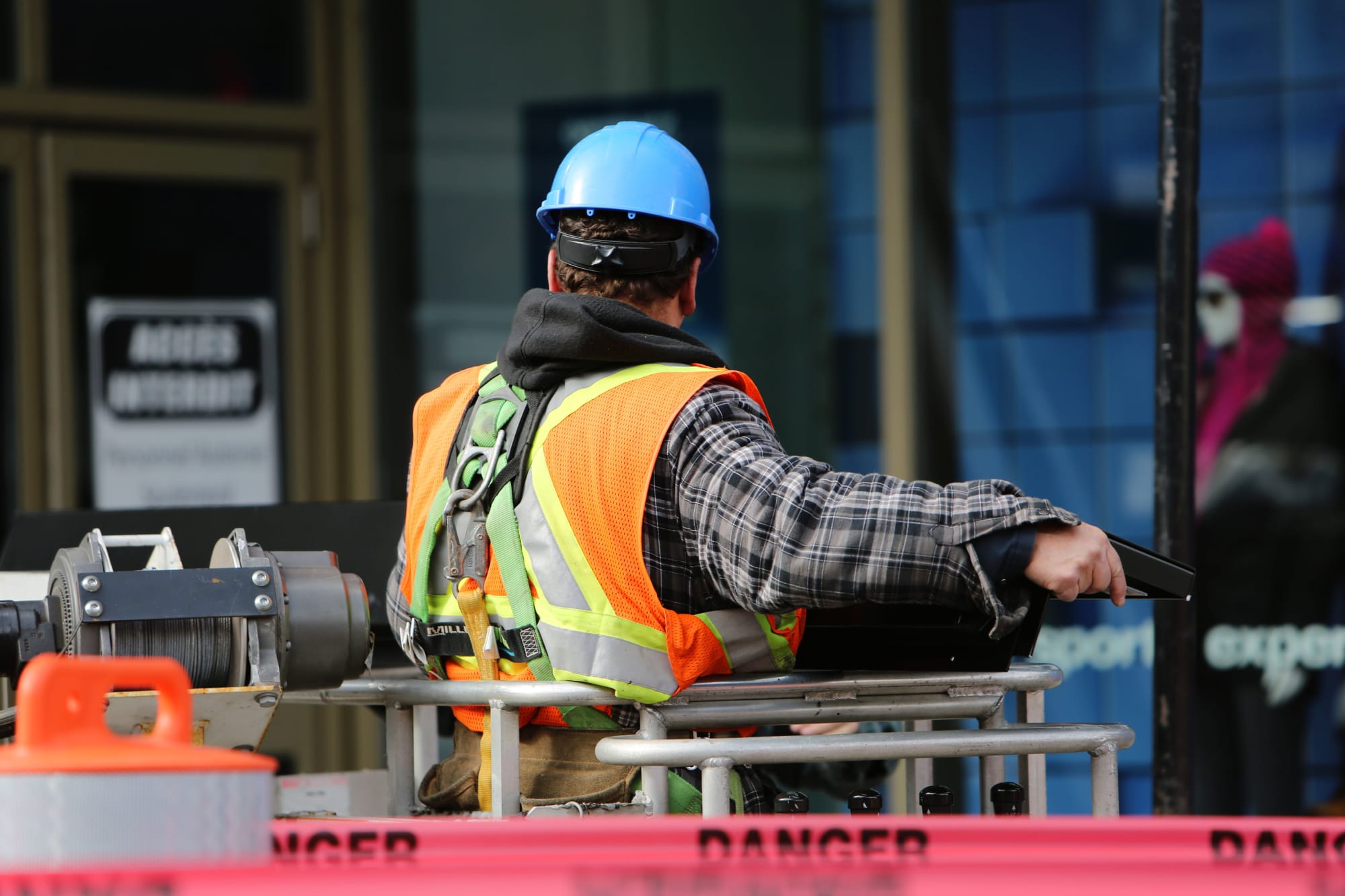
Group three, Mr Andrews explained, consists of businesses that will scale down their operations, such as abattoirs and construction businesses.
According to the Premier, commercial building construction will be limited to 25 per cent of staff on site, while residential construction, home construction, will only see five people on site at any one time.
The expectation is that the stage 4 restrictions will result in 250,000 fewer commuters each day. Affected businesses are expected to be eligible for up to $10,000 in grants.
BIS Oxford Economics senior economist Sean Langcake said business payments, including JobKeeper, as well as grants from the Victorian government, will not be enough to stop the economy sliding.
“These restrictions will delay the labour market recovery and will push the economy towards a fall in output in Q3 – indirect spillovers are expected to materialise in business supply chains and confidence,” Mr Langcake said.
The stage four lockdown in Melbourne poses a significant headwind to the national recover, he further noted.
"Activity in Victoria will fall below its previous trough in April as the economy is now facing tougher trading restrictions. Beyond the restrictions on consumers, the pull-back in activity on construction sites and in the manufacturing sector will be a significant drag over the next six weeks at least. Employment losses will be cushioned by the JobKeeper program, but there will still be a deterioration in the labour market, and we expect the unemployment rate will now stay elevated for longer," Mr Langcake said.
"These lockdowns indicate state borders will be closed for longer, which will weigh on domestic tourism. And supply chain impacts are likely to weigh on national GDP growth through the rest of 2020 and into 2021."
He also highlighted that the likely recovery has not changed, although not all sectors will be equally impacted.
"In terms of GDP, we still expect a slow, ‘U’ shaped recovery. Some higher frequency indicators, such as employment and retail sales, are more likely to see a W shaped recovery," Mr Langcake concluded.
About the author
About the author
Economy
Australia’s spending surprise raises the odds of a February rate move — here’s how to protect margin and momentum
Household outlays are running hotter than economists expected, with the latest ABS readings showing broad-based gains across services and goods. That resilience is exactly the kind of demand impulse ...Read more
Economy
Australia’s inflation cools to 3.4% — why the RBA’s next move still isn’t a lay‑up for business
Headline inflation easing is good optics; balance sheets feel something different. With year‑on‑year CPI down to 3.4% in November from 3.8%, hopes for rate relief are rising — but policymakers remain ...Read more
Economy
Inflation cools to 3.4% — but the RBA’s reaction function keeps businesses on a knife-edge
Australia’s headline CPI edged down to 3.4% year-on-year in November, from 3.8%, easing immediate pressure but not eliminating the risk of further tightening. With services inflation sticky and ...Read more
Economy
Higher-for-longer, not higher forever: How Australia’s inflation ‘surprise’ is rewriting CFO playbooks for 2026
Australia’s latest inflation pulse eased but didn’t budge bank outlooks: near‑term rate cuts are still a long shot, with some houses flagging upside risk. That steadier‑for‑longer cash rate is pushing ...Read more
Economy
Australia's inflation illusion: the real challenge lies in pricing power and productivity
Headline inflation has cooled to 3.4% year-on-year, but the Reserve Bank’s caution—and a still‑hot housing backdrop—mean the rate threat hasn’t left the room. For boards, the next few quarters are ...Read more
Economy
When house prices lift, tills ring: A case study in turning Australia’s wealth effect into growth
Australia’s latest upswing in household wealth, anchored by higher dwelling values, is more than a feel‑good statistic—it is a profit and planning signal. The ABS notes property’s centrality to ...Read more
Economy
RBA's hawkish stance reflects inflation concerns, State Street economist comments
In a recent statement, the Reserve Bank of Australia (RBA) has signaled a hawkish stance on interest rates, drawing insights from financial experts about the implications for Australia's economic ...Read more
Economy
Navigating the inflation maze: How CFOs can outsmart economic hurdles in Australia
Fresh inflation data have cooled expectations of near-term rate cuts in Australia, intensifying pressure on margins, capital allocation and demand. Rather than wait for monetary relief that may not ...Read more
Economy
Australia’s spending surprise raises the odds of a February rate move — here’s how to protect margin and momentum
Household outlays are running hotter than economists expected, with the latest ABS readings showing broad-based gains across services and goods. That resilience is exactly the kind of demand impulse ...Read more
Economy
Australia’s inflation cools to 3.4% — why the RBA’s next move still isn’t a lay‑up for business
Headline inflation easing is good optics; balance sheets feel something different. With year‑on‑year CPI down to 3.4% in November from 3.8%, hopes for rate relief are rising — but policymakers remain ...Read more
Economy
Inflation cools to 3.4% — but the RBA’s reaction function keeps businesses on a knife-edge
Australia’s headline CPI edged down to 3.4% year-on-year in November, from 3.8%, easing immediate pressure but not eliminating the risk of further tightening. With services inflation sticky and ...Read more
Economy
Higher-for-longer, not higher forever: How Australia’s inflation ‘surprise’ is rewriting CFO playbooks for 2026
Australia’s latest inflation pulse eased but didn’t budge bank outlooks: near‑term rate cuts are still a long shot, with some houses flagging upside risk. That steadier‑for‑longer cash rate is pushing ...Read more
Economy
Australia's inflation illusion: the real challenge lies in pricing power and productivity
Headline inflation has cooled to 3.4% year-on-year, but the Reserve Bank’s caution—and a still‑hot housing backdrop—mean the rate threat hasn’t left the room. For boards, the next few quarters are ...Read more
Economy
When house prices lift, tills ring: A case study in turning Australia’s wealth effect into growth
Australia’s latest upswing in household wealth, anchored by higher dwelling values, is more than a feel‑good statistic—it is a profit and planning signal. The ABS notes property’s centrality to ...Read more
Economy
RBA's hawkish stance reflects inflation concerns, State Street economist comments
In a recent statement, the Reserve Bank of Australia (RBA) has signaled a hawkish stance on interest rates, drawing insights from financial experts about the implications for Australia's economic ...Read more
Economy
Navigating the inflation maze: How CFOs can outsmart economic hurdles in Australia
Fresh inflation data have cooled expectations of near-term rate cuts in Australia, intensifying pressure on margins, capital allocation and demand. Rather than wait for monetary relief that may not ...Read more