




Borrow
US high inflation could lead to ‘abrupt adjustments’, Dr Lowe says
US high inflation has come as a surprise to governor Philip Lowe.
US high inflation could lead to ‘abrupt adjustments’, Dr Lowe says


US inflation has hit a 40-year high after food, electricity, and shelter propelled the consumer price index to annual gains of 7.5 per cent last month – the steepest year-on-year increase since February 1982.
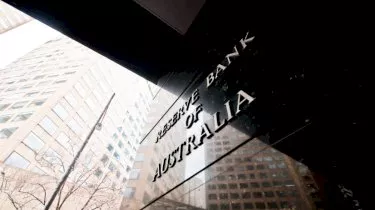
Speaking before the House of Representatives standing committee on economics, the Reserve Bank governor Philip Lowe conceded that the news out of the US has come as a surprise.
“The sharp pick-up in inflation in parts of the world, especially in the United States, has come as a surprise and is an additional source of uncertainty about the outlook,” Dr Lowe said.
“For the first time in several decades, inflation has become a major issue in the global economy,” he noted.
“In the United States, CPI inflation is running at more than 7 per cent and in the United Kingdom it is expected to be at a similar rate soon. In Germany, inflation is 5.7 per cent and in New Zealand it is 5.9 per cent. These are the highest rates in decades and the higher inflation is turning out to be more persistent than earlier expected.”
He conceded that there is a risk to Australia that foreign central banks will have to increase interest rates, noting “it is entirely possible” that countries will need bigger adjustments than currently anticipated, which could result in an “abrupt adjustment in financial conditions”.
Dr Lower, however, stressed that Australia differs greatly from the United States. Firstly, “we have not seen the same increases in goods prices as have occurred in the United States,” the governor said.
“It is also relevant that the prices that Australian households pay for utilities are little changed and have not gone up sharply like the prices of utilities in Europe. Rent inflation has also been lower in Australia than elsewhere”.
According to the RBA’s central forecast, underlying inflation will increase to 3.25 per cent in the coming quarters before easing to around 2.75 per cent, reflecting the ongoing effects of supply-side disruptions, most recently due to Omicron, at a time of strong demand.
“As these supply-side pressures are resolved, some of the current upward pressure on prices is expected to abate. An offset to this, though, is expected to be stronger growth in labour costs due to the tighter labour market,” Dr Lowe said.
Reiterating the RBA’s preparedness “to be patient”, the governor rejected predictions that interest rates would rise this year, cautioning that moving too soon would put employment gains at risk.
“I recognise that there is a risk to waiting but there is also a risk to moving too early. Over the period ahead we have the opportunity to secure a lower rate of unemployment than was thought possible just a short while ago. Moving too early could put this at risk,” Dr Lowe said.
“The stronger the economy and the more upward pressure on prices and wages, the stronger will be the case for an increase in interest rates.”
RELATED ARTICLES
About the author

About the author


Banking
ANZ’s company-borrower mortgage clampdown: a risk reset with wide spillovers for SMEs, investors and non-banks
ANZ has tightened credit settings for home loans where the borrowing entity is a company — a narrow policy change with broad commercial consequences. It signals a shift in risk appetite across ...Read more

Banking
CBA’s investor-loan win signals a new phase in Australia’s mortgage machine
Commonwealth Bank’s outperformance in investor mortgages isn’t just a leaderboard moment; it’s a proxy for who owns the next growth leg in a broker‑led, increasingly digital mortgage marketRead more

Banking
A divided Big Four signals a two-track 2026: how to profit from rate uncertainty
Australia’s largest banks can’t agree on where the cash rate lands in 2026 — a split that matters more than the number itself. When the price of money is ambiguous, strategy becomes a game of ...Read more

Banking
Brokers own the mortgage funnel: Why a 77% share is reshaping bank strategy in Australia
Australia’s mortgage market has quietly consolidated around one gatekeeper: the broker. With brokers facilitating roughly 77% of new home loans, distribution power has migrated from bank branches to ...Read more
Banking
Commonwealth Bank leads consideration while People First Bank tops satisfaction in YouGov’s latest rankings
In a revealing snapshot of Australia's banking landscape, the Commonwealth Bank (CBA) has emerged as the most considered financial institution among prospective customers, according to YouGov's ...Read more

Banking
End of the easing: what a major bank’s call signals for Australian balance sheets
A major Australian bank now argues the Reserve Bank’s rate-cut run has hit a pause, resetting the risk-free rate narrative across corporate Australia. The Reserve Bank of Australia’s latest Statement ...Read more

Banking
Open banking, real returns: How an Australian brokerage turned CDR data into deal velocity
Open banking is no longer a whiteboard theory—it’s a working growth engine. This case study unpacks how a mid-sized Australian brokerage (“Pink Finance”) operationalised Consumer Data Right (CDR) data ...Read more

Banking
Open banking’s quiet revolution: how one broker’s data play rewrites speed, trust and margin
Open banking is shifting from compliance cost to commercial engine, and early adopters in Australia’s broking market are already monetising the curve. The playbook: consented bank-grade data piped ...Read more
Banking
ANZ’s company-borrower mortgage clampdown: a risk reset with wide spillovers for SMEs, investors and non-banks
ANZ has tightened credit settings for home loans where the borrowing entity is a company — a narrow policy change with broad commercial consequences. It signals a shift in risk appetite across ...Read more
Banking
CBA’s investor-loan win signals a new phase in Australia’s mortgage machine
Commonwealth Bank’s outperformance in investor mortgages isn’t just a leaderboard moment; it’s a proxy for who owns the next growth leg in a broker‑led, increasingly digital mortgage marketRead more
Banking
A divided Big Four signals a two-track 2026: how to profit from rate uncertainty
Australia’s largest banks can’t agree on where the cash rate lands in 2026 — a split that matters more than the number itself. When the price of money is ambiguous, strategy becomes a game of ...Read more
Banking
Brokers own the mortgage funnel: Why a 77% share is reshaping bank strategy in Australia
Australia’s mortgage market has quietly consolidated around one gatekeeper: the broker. With brokers facilitating roughly 77% of new home loans, distribution power has migrated from bank branches to ...Read more
Banking
Commonwealth Bank leads consideration while People First Bank tops satisfaction in YouGov’s latest rankings
In a revealing snapshot of Australia's banking landscape, the Commonwealth Bank (CBA) has emerged as the most considered financial institution among prospective customers, according to YouGov's ...Read more
Banking
End of the easing: what a major bank’s call signals for Australian balance sheets
A major Australian bank now argues the Reserve Bank’s rate-cut run has hit a pause, resetting the risk-free rate narrative across corporate Australia. The Reserve Bank of Australia’s latest Statement ...Read more
Banking
Open banking, real returns: How an Australian brokerage turned CDR data into deal velocity
Open banking is no longer a whiteboard theory—it’s a working growth engine. This case study unpacks how a mid-sized Australian brokerage (“Pink Finance”) operationalised Consumer Data Right (CDR) data ...Read more
Banking
Open banking’s quiet revolution: how one broker’s data play rewrites speed, trust and margin
Open banking is shifting from compliance cost to commercial engine, and early adopters in Australia’s broking market are already monetising the curve. The playbook: consented bank-grade data piped ...Read more