


Invest
The suburbs where your property will pay for itself
Spoiler alert: they’re not in Sydney or Melbourne.
The suburbs where your property will pay for itself
Property analyst Propertyology has released research naming the top capital city suburbs for rental properties, with Sydney, Melbourne and Canberra notably absent.
“Our research proves there are plenty of suburbs within Australia’s capital cities where high rent returns make it easier on landlords to patiently wait for equity gains,” said Propertyology managing director Simon Pressley.
“In some locations, even with a low 10 per cent deposit, the typical property is putting money back into the owner’s pocket each year.”
However, the nation’s premier cities have a paucity of suburbs in which an investor can purchase a detached house and have it be cash flow positive with a deposit of 20 per cent or less.
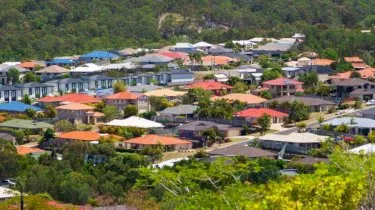
Noting that cash flow is only one factor in what makes an investment property worthwhile, Mr Pressley said investors looking for strong cash flow need to expand their horizons.
“Even though it’s 80 kilometres from Sydney’s [CBD], the Central Coast (Wyong and Gosford) are technically part of greater Sydney, while Medlow Bath in the Blue Mountains has a median house price of $500,000,” he said.
“Compare that to somewhere like Blacktown, 38 kilometres west of Sydney. That suburb has a median house price of $740,000 and a property there will cost $11,775 per year to maintain, even if you have a 20 per cent deposit.”
“The figures are even worse for Hornsby, where a median house price of $1.33 million will leave you $26,152 a year worse off.”
That’s before investors account for the end of Sydney’s growth phase, Mr Pressley said, adding that Victoria is in a similar situation.
“Victoria paints a similar picture with greater Melbourne’s best locations for cash flow investors within the municipality of Melton – 40 kilometres north-west of the CBD,” he said.
“Here, the median house price is around $400,000 and will cost those with a 20 per cent deposit just $4,000 per year to hold.”
Then there’s inner city Brunswick, which demands an average $23,805 a year to maintain the holding: “A tough ask if you’re trying to be patient.”
However, Mr Pressley acknowledged that high cash flow and capital growth potential don’t necessarily go hand-in-hand.
Nevertheless, he said, “they can be found in every state”.
So, which suburbs made the cut?
|
Suburb |
Distance |
Median |
Annual holding costs @ 80% LVR |
|
Karama, NT |
10.5 |
$392,000 |
$ 3,682 |
$ 1,722 |
|
Coopers Plains, Qld |
15.0 |
$398,750 |
$ 3,632 |
$ 1,638 |
|
Risdon Vale, Tas |
8.1 |
$222,500 |
$ 3,435 |
$ 2,322 |
|
Gagebrook, Tas |
16.1 |
$170,000 |
$ 3,339 |
$ 2,489 |
|
Chigwell, Tas |
10.7 |
$260,000 |
$ 3,033 |
$ 1,733 |
|
Muirhead, NT |
12.0 |
$650,000 |
$ 2,915 |
($ 335) |
|
Cedar Vale, Qld |
45.7 |
$480,000 |
$ 2,797 |
$ 397 |
|
New Norfolk, Tas |
24.8 |
$212,500 |
$ 2,737 |
$ 1,674 |
|
Bridgewater, Tas |
17.2 |
$210,000 |
$ 2,617 |
$ 1,567 |
|
Malak, NT |
10.1 |
$450,000 |
$ 2,460 |
$ 210 |
|
Davoren Park, SA |
27.0 |
$188,750 |
$ 2,369 |
$ 1,425 |
|
Smithfield Plains, SA |
28.2 |
$199,500 |
$ 2,219 |
$ 1,257 |
|
Elizabeth North, SA |
26.1 |
$197,750 |
$ 2,089 |
$ 1,110 |
|
Elizabeth East, SA |
22.7 |
$210,000 |
$ 1,958 |
$ 908 |
|
Russell Island, Qld |
41.2 |
$190,000 |
$ 1,880 |
$ 930 |
|
Wagaman, NT |
10.2 |
$490,000 |
$ 1,738 |
$ 712 |
|
Blackstone, Qld |
28.0 |
$301,000 |
$ 1,612 |
$ 107 |
|
Gailes, Qld |
19.4 |
$250,000 |
$ 1,456 |
|
|
Virginia, NT |
22.7 |
$630,000 |
$ 1,409 |
$ 1,741 |
|
Hackham West, SA |
23.7 |
$261,500 |
$ 1,216 |
($ 92) |
|
Brookdale, WA |
27.5 |
$258,000 |
$ 917 |
($ 373) |
|
Hillman, WA |
37.7 |
$278,000 |
$ 117 |
($ 1,273) |
|
Dayton, WA |
15.1 |
$432,500 |
$ 86 |
($ 2,077) |
|
Gilmore, ACT |
15.5 |
$545,000 |
($ 22) |
($ 2,747) |
|
Medina, WA |
31.5 |
$238,000 |
($ 40) |
($ 1,230) |
|
Gowrie, ACT |
14.9 |
$576,500 |
($ 404) |
($ 3,287) |
|
Richardson, ACT |
16.6 |
$495,000 |
($ 438) |
($ 2,913) |
|
Armadale, WA |
25.7 |
$250,000 |
($ 520) |
($ 1,770) |
|
Charnwood, ACT |
12.2 |
$460,000 |
($ 575) |
($ 2,875) |
|
Calwell, ACT |
18.0 |
$550,000 |
($ 881) |
($ 3,631) |
|
Millgrove, Vic |
61.7 |
$365,000 |
($ 1,826) |
($ 3,651) |
|
Rockbank, Vic |
27.9 |
$505,000 |
($ 2,375) |
($ 4,900) |
|
Kurunjang, Vic |
36.9 |
$388,750 |
($ 2,996) |
($ 4,939) |
|
Lake Munmorah, NSW |
82.1 |
$490,000 |
($ 3,093) |
($ 5,543) |
|
Watanobbi, NSW |
68.8 |
$495,000 |
($ 3,293) |
($ 5,768) |
|
Mannering Park, NSW |
85.2 |
$480,000 |
($ 3,681) |
($ 6,081) |
|
Kanwal, NSW |
69.4 |
$495,000 |
($ 3,732) |
($ 6,207) |
|
San Remo, NSW |
77.4 |
$465,000 |
($ 3,740) |
($ 6,065) |
|
Melton South, Vic |
36.4 |
$398,000 |
($ 3,915) |
($ 5,905) |
|
Warburton, VIC |
64.7 |
$423,500 |
($ 3,946) |
($ 6,064) |
These calculations are based on median house values and median rents as at May 2018, with annual holding costs based on four weeks vacancy a year, 4.5 per cent loan interest and general provisions for property management fees, council rates, maintenance and insurance.
Property
Trust, technology and triage: what NSW’s ‘name and shame’ signals for real estate governance
NSW’s latest enforcement action on real estate trust accounts isn’t a one-off embarrassment; it’s a stress test of sector governance. With licences suspended and penalties applied, the message is ...Read more
Property
Vacancy is rising, demand is resilient: A case study in defending yield as Australia’s rental cycle rebalances
After a blistering run, Australia’s rental market is loosening at the edges. Vacancy is edging up off historic lows, rent inflation is set to moderate into 2026, yet underlying demand remains ...Read more
Property
Don’t lose the deposit: A case study in stopping real estate payment fraud — and the ROI for doing it
Deposit redirection scams are quietly eroding buyer savings and agency reputations in Australia’s property market. This case study unpacks how a mid-tier real estate group redesigned its settlement ...Read more
Property
The $12m threshold: Why portfolio value, not property count, now defines Australia’s investor elite
The old yardstick of six properties as shorthand for investment success has been overtaken by a harsher reality: in today’s market, elite status is defined by balance-sheet strength, not asset countRead more
Property
From intuition to instrumentation: How a "two-stakeholder" sales playbook lifted close rates and cut cycle times
High-stakes consumer purchases are increasingly joint decisions. When one partner is under-served, deals stall. This case study follows an Australian real estate group that rebuilt its sales motion ...Read more
Property
Selling in 2025: How to spot bad agents fast—and build an ROI-first vendor playbook
In Australia’s property market, choosing the wrong listing agent isn’t just inconvenient—it’s a textbook principal–agent failure that can wipe tens of thousands off your sale outcomeRead more
Property
Selling in 2026: How to de‑risk your agent choice and protect tens of thousands at settlement
Choosing the wrong selling agent isn’t just an inconvenience — it’s a balance‑sheet risk. In a market where digital discovery is concentrated and AI is recasting how listings are priced and promoted, ...Read more
Property
Rate resilience in Australian housing: why scarce supply is overpowering monetary tightening
Australia’s housing market is defying higher borrowing costs because the binding constraint isn’t demand—it’s supply. Brokers report persistent buyer competition and investor repositioning, while ...Read more
Property
Trust, technology and triage: what NSW’s ‘name and shame’ signals for real estate governance
NSW’s latest enforcement action on real estate trust accounts isn’t a one-off embarrassment; it’s a stress test of sector governance. With licences suspended and penalties applied, the message is ...Read more
Property
Vacancy is rising, demand is resilient: A case study in defending yield as Australia’s rental cycle rebalances
After a blistering run, Australia’s rental market is loosening at the edges. Vacancy is edging up off historic lows, rent inflation is set to moderate into 2026, yet underlying demand remains ...Read more
Property
Don’t lose the deposit: A case study in stopping real estate payment fraud — and the ROI for doing it
Deposit redirection scams are quietly eroding buyer savings and agency reputations in Australia’s property market. This case study unpacks how a mid-tier real estate group redesigned its settlement ...Read more
Property
The $12m threshold: Why portfolio value, not property count, now defines Australia’s investor elite
The old yardstick of six properties as shorthand for investment success has been overtaken by a harsher reality: in today’s market, elite status is defined by balance-sheet strength, not asset countRead more
Property
From intuition to instrumentation: How a "two-stakeholder" sales playbook lifted close rates and cut cycle times
High-stakes consumer purchases are increasingly joint decisions. When one partner is under-served, deals stall. This case study follows an Australian real estate group that rebuilt its sales motion ...Read more
Property
Selling in 2025: How to spot bad agents fast—and build an ROI-first vendor playbook
In Australia’s property market, choosing the wrong listing agent isn’t just inconvenient—it’s a textbook principal–agent failure that can wipe tens of thousands off your sale outcomeRead more
Property
Selling in 2026: How to de‑risk your agent choice and protect tens of thousands at settlement
Choosing the wrong selling agent isn’t just an inconvenience — it’s a balance‑sheet risk. In a market where digital discovery is concentrated and AI is recasting how listings are priced and promoted, ...Read more
Property
Rate resilience in Australian housing: why scarce supply is overpowering monetary tightening
Australia’s housing market is defying higher borrowing costs because the binding constraint isn’t demand—it’s supply. Brokers report persistent buyer competition and investor repositioning, while ...Read more





