




Invest
Population boom needs transport and infrastructure investment
$600 billion in spending is needed over the next 15 years to avoid congestion and overcrowding in capital city transport networks, as Australian cities feel the strain of population growth.
Population boom needs transport and infrastructure investment

$600 billion in spending is needed over the next 15 years to avoid congestion and overcrowding in capital city transport networks, as Australian cities feel the strain of population growth.

A new report from Infrastructure Australia has flagged that, every five years, the nation must spend $200 billion on new projects just to keep up with rising populations.
Infrastructure Australia’s comments align with that of the Reserve Bank of Australia’s governor, Philip Lowe, who has repeatedly called for greater fiscal stimulus.
Unsustainable growth
Despite Australia’s major cities requiring record spending for the next 15 years at least, Infrastructure Australia’s chair, Julieanne Alroe, said it is getting harder for Australians to fund such growth.
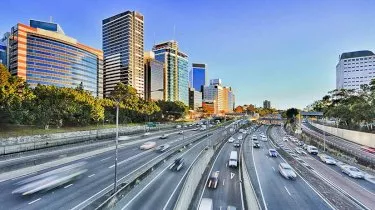
Analysis of the household expenditure survey used in the audit found the average household spent just $314 each week on infrastructure in 2015–16 — or $16,000 annually.
“Australians earning the lowest 20 per cent of incomes across the country spend around a third of what they earn on infrastructure”, which is above a level that would be considered affordable, according to Ms Alroe.
Despite rising electricity costs gaining notoriety, Ms Alroe said lack of transportation is costing lower-income earners more.
“While concerns about rising energy prices are widely held, the proportion of household income spent on energy is relatively low, [at] 2 to 6 per cent, in contrast to transport which accounts for between 10 and 22 per cent,” she continued.
Cost of inaction
Despite the fact that Australians are feeling the pinch from funding these projects, a lack of funding today creates a larger problem tomorrow, the report considered.
Calling the cost of inaction “significant”, Ms Alroe said that “if investment were to stop, the cost of road congestion is projected to grow by $18.9 billion to $38.7 billion in 2031”.
She said this will impact on Australians’ quality of life as well as our economic productivity and competitiveness as a nation.
Acknowledging the issues contained within the report, the Australian Prime Minister has noted current action on new projects in response to the same information as is contained in the report.
“The report predated the 2019–2020 budget which had $23 billion specifically extra in projects, including 160 congestion budget projects, so there has already been a significant addition in terms of what the Commonwealth is doing to the information the report is based on,” Mr Morrison had outlined.
RELATED ARTICLES
-

Trust, technology and triage: what NSW’s ‘name and shame’ signals for real estate governance
-

Vacancy is rising, demand is resilient: A case study in defending yield as Australia’s rental cycle rebalances
-

From intuition to instrumentation: How a "two-stakeholder" sales playbook lifted close rates and cut cycle times
About the author

About the author

Property
Trust, technology and triage: what NSW’s ‘name and shame’ signals for real estate governance
NSW’s latest enforcement action on real estate trust accounts isn’t a one-off embarrassment; it’s a stress test of sector governance. With licences suspended and penalties applied, the message is ...Read more
Property
Vacancy is rising, demand is resilient: A case study in defending yield as Australia’s rental cycle rebalances
After a blistering run, Australia’s rental market is loosening at the edges. Vacancy is edging up off historic lows, rent inflation is set to moderate into 2026, yet underlying demand remains ...Read more
Property
From intuition to instrumentation: How a "two-stakeholder" sales playbook lifted close rates and cut cycle times
High-stakes consumer purchases are increasingly joint decisions. When one partner is under-served, deals stall. This case study follows an Australian real estate group that rebuilt its sales motion ...Read more

Property
Selling in 2025: How to spot bad agents fast—and build an ROI-first vendor playbook
In Australia’s property market, choosing the wrong listing agent isn’t just inconvenient—it’s a textbook principal–agent failure that can wipe tens of thousands off your sale outcomeRead more

Property
Selling in 2026: How to de‑risk your agent choice and protect tens of thousands at settlement
Choosing the wrong selling agent isn’t just an inconvenience — it’s a balance‑sheet risk. In a market where digital discovery is concentrated and AI is recasting how listings are priced and promoted, ...Read more

Property
Rate resilience in Australian housing: why scarce supply is overpowering monetary tightening
Australia’s housing market is defying higher borrowing costs because the binding constraint isn’t demand—it’s supply. Brokers report persistent buyer competition and investor repositioning, while ...Read more

Property
Victoria’s $100m renter support push: what it means for landlords, proptech and the housing economy
Victoria has unveiled a new suite of rental support services, including a dedicated helpline for renters aged 55+, underpinned by a funding package widely reported at around $100 millionRead more
Property
The multigenerational home moves mainstream: where the next margin lives in Australian real estate
Multigenerational living is shifting from edge case to core demand driver in Australia’s housing market. For agents, developers and lenders, the commercial upside lies in rethinking product design, ...Read more
Property
Trust, technology and triage: what NSW’s ‘name and shame’ signals for real estate governance
NSW’s latest enforcement action on real estate trust accounts isn’t a one-off embarrassment; it’s a stress test of sector governance. With licences suspended and penalties applied, the message is ...Read more
Property
Vacancy is rising, demand is resilient: A case study in defending yield as Australia’s rental cycle rebalances
After a blistering run, Australia’s rental market is loosening at the edges. Vacancy is edging up off historic lows, rent inflation is set to moderate into 2026, yet underlying demand remains ...Read more
Property
From intuition to instrumentation: How a "two-stakeholder" sales playbook lifted close rates and cut cycle times
High-stakes consumer purchases are increasingly joint decisions. When one partner is under-served, deals stall. This case study follows an Australian real estate group that rebuilt its sales motion ...Read more
Property
Selling in 2025: How to spot bad agents fast—and build an ROI-first vendor playbook
In Australia’s property market, choosing the wrong listing agent isn’t just inconvenient—it’s a textbook principal–agent failure that can wipe tens of thousands off your sale outcomeRead more
Property
Selling in 2026: How to de‑risk your agent choice and protect tens of thousands at settlement
Choosing the wrong selling agent isn’t just an inconvenience — it’s a balance‑sheet risk. In a market where digital discovery is concentrated and AI is recasting how listings are priced and promoted, ...Read more
Property
Rate resilience in Australian housing: why scarce supply is overpowering monetary tightening
Australia’s housing market is defying higher borrowing costs because the binding constraint isn’t demand—it’s supply. Brokers report persistent buyer competition and investor repositioning, while ...Read more
Property
Victoria’s $100m renter support push: what it means for landlords, proptech and the housing economy
Victoria has unveiled a new suite of rental support services, including a dedicated helpline for renters aged 55+, underpinned by a funding package widely reported at around $100 millionRead more
Property
The multigenerational home moves mainstream: where the next margin lives in Australian real estate
Multigenerational living is shifting from edge case to core demand driver in Australia’s housing market. For agents, developers and lenders, the commercial upside lies in rethinking product design, ...Read more