




Invest
Housing affordability advocates say Labor needs to think bigger
The Australian Council of Social Services has praised Labor’s proposed $10 billion spend on social housing, but said that broader reforms are necessary to address issues of structural inequality.
Housing affordability advocates say Labor needs to think bigger

The Australian Council of Social Services has praised Labor’s proposed $10 billion spend on social housing, but said that broader reforms are necessary to address issues of structural inequality.

According to ACOSS CEO Cassandra Goldie, “We welcome the commitment to leave no one behind. However, to reduce structural inequality, Labor must commit to raising social security payments above the poverty line, including JobSeeker, which is now a brutal $44 per day.”
“Leaving about 2 million people and 1 million children unable to pay rent, eat three meals, [and] look for a job is the definition of leaving someone behind,” Ms Goldie said.
Announced as part of the opposition’s formal budget reply speech, the $10 billion Housing Australia Future Fund would see a Labor government build 20,000 social housing properties over the first five years.
Labor expects the initiative to inject $34.8 billion into the economy over five years, creating 21,500 jobs.
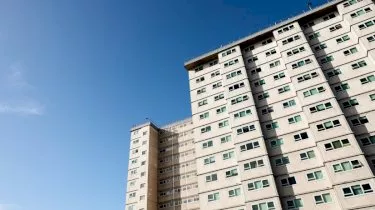
The ACOSS isn’t the only affordability advocacy group that sees the Housing Australia Future Fund as the beginning, rather than the end, of the discussion around affordable housing in Australia.
National Shelter executive officer Adrian Pisarski said that “investment at that scale will be the largest ongoing investment we’ve seen and will make a massive dent in social housing backlogs”.
However, he added, “Over time, more would be needed to allow social and affordable housing to keep pace with the real and desperate need in our communities neglected over the past 15 years.”
According to a 2018 report by the Grattan Institute, “Building an extra 50,000 homes a year for a decade could leave Australian house prices 5 to 20 per cent lower than what they would have been otherwise, and stem rising public anxiety about housing affordability.”
In the most recent federal budget, the government committed to supporting the state and territory governments through $124.7 million in funding for social and community housing.
Hal Pawson, Professor of Housing Research and Policy at Sydney's City Futures Research Centre, said that "the cost of homelessness services has been rising at far above inflation in recent years. It was already set to top $1 billion in 2020 before the pandemic struck, necessitating a one-off spend that will be far higher than that."
"The Minister’s line is that ‘we already spend $8 billion on housing and homelessness’ and this is true, but most of this is rental subsidy to private landlords. Some of the remainder is paid to state/territory govt for homelessness services and to subsidise the operating costs of existing public housing. Virtually none of this pays for new housing construction."
Speaking to nestegg, Pawson cited the proposal's similarities to the NSW Government’s 2015 Social and Affordable Housing Fund and argued that "it could be said that the new proposal adopts a model that has been recently proven as practicable in Australia."
Framing the proposed fund as modest but significant, "this initiative sounds like a worthwhile one," Pawson said.
"If it can create 4,000 new social homes per year over 5 years, the proposed scheme would expand the overall annual supply of social lettings during that period by 12 per cent."
Unfortunately, "For most of the past 25 years, social housing provision has been failing to keep pace with the rising need that results from a growing population. It has therefore declined from 6 per cent of all housing to 4 per cent."
"On our calculations, 15,000 new homes per year would be needed ‘just to stand still’ in these terms. So 4,000 p.a. will only enable the relative size of social housing to decline more slowly" as a percentage of all housing.
RELATED ARTICLES
About the author

About the author


Property
Multigenerational living is moving mainstream: how agents, developers and lenders can monetise the shift
Australia’s quiet housing revolution is no longer a niche lifestyle choice; it’s a structural shift in demand that will reward property businesses prepared to redesign product, pricing and ...Read more

Property
Prestige property, precision choice: a case study in selecting the right agent when millions are at stake
In Australia’s top-tier housing market, the wrong agent choice can quietly erase six figures from a sale. Privacy protocols, discreet buyer networks and data-savvy marketing have become the new ...Read more

Property
From ‘ugly’ to alpha: Turning outdated Australian homes into high‑yield assets
In a tight listings market, outdated properties aren’t dead weight—they’re mispriced optionality. Agencies and vendors that industrialise light‑touch refurbishment, behavioural marketing and ...Read more

Property
The 2026 Investor Playbook: Rental Tailwinds, City Divergence and the Tech-Led Operations Advantage
Rental income looks set to do the heavy lifting for investors in 2026, but not every capital city will move in lockstep. Industry veteran John McGrath tips a stronger rental year and a Melbourne ...Read more

Property
Prestige property, precision choice: Data, discretion and regulation now decide million‑dollar outcomes
In Australia’s prestige housing market, the selling agent is no longer a mere intermediary but a strategic supplier whose choices can shift outcomes by seven figures. The differentiators are no longer ...Read more

Property
The new battleground in housing: how first-home buyer policy is reshaping Australia’s entry-level market
Government-backed guarantees and stamp duty concessions have pushed fresh demand into the bottom of Australia’s price ladder, lifting values and compressing selling times in entry-level segmentsRead more

Property
Property 2026: Why measured moves will beat the market
In 2026, Australian property success will be won by investors who privilege resilience over velocity. The market is fragmenting by suburb and asset type, financing conditions remain tight, and ...Read more

Property
Entry-level property is winning: How first home buyer programs are reshaping demand, pricing power and strategy
Lower-priced homes are appreciating faster as government support channels demand into the entry tier. For developers, lenders and marketers, this is not a blip—it’s a structural reweighting of demand ...Read more
Property
Multigenerational living is moving mainstream: how agents, developers and lenders can monetise the shift
Australia’s quiet housing revolution is no longer a niche lifestyle choice; it’s a structural shift in demand that will reward property businesses prepared to redesign product, pricing and ...Read more
Property
Prestige property, precision choice: a case study in selecting the right agent when millions are at stake
In Australia’s top-tier housing market, the wrong agent choice can quietly erase six figures from a sale. Privacy protocols, discreet buyer networks and data-savvy marketing have become the new ...Read more
Property
From ‘ugly’ to alpha: Turning outdated Australian homes into high‑yield assets
In a tight listings market, outdated properties aren’t dead weight—they’re mispriced optionality. Agencies and vendors that industrialise light‑touch refurbishment, behavioural marketing and ...Read more
Property
The 2026 Investor Playbook: Rental Tailwinds, City Divergence and the Tech-Led Operations Advantage
Rental income looks set to do the heavy lifting for investors in 2026, but not every capital city will move in lockstep. Industry veteran John McGrath tips a stronger rental year and a Melbourne ...Read more
Property
Prestige property, precision choice: Data, discretion and regulation now decide million‑dollar outcomes
In Australia’s prestige housing market, the selling agent is no longer a mere intermediary but a strategic supplier whose choices can shift outcomes by seven figures. The differentiators are no longer ...Read more
Property
The new battleground in housing: how first-home buyer policy is reshaping Australia’s entry-level market
Government-backed guarantees and stamp duty concessions have pushed fresh demand into the bottom of Australia’s price ladder, lifting values and compressing selling times in entry-level segmentsRead more
Property
Property 2026: Why measured moves will beat the market
In 2026, Australian property success will be won by investors who privilege resilience over velocity. The market is fragmenting by suburb and asset type, financing conditions remain tight, and ...Read more
Property
Entry-level property is winning: How first home buyer programs are reshaping demand, pricing power and strategy
Lower-priced homes are appreciating faster as government support channels demand into the entry tier. For developers, lenders and marketers, this is not a blip—it’s a structural reweighting of demand ...Read more