Invest
From resilience to strength: How returning to normality is driving Adelaide’s growth
Invest
From resilience to strength: How returning to normality is driving Adelaide’s growth
Adelaide’s success with preventing the spread of COVID-19 is seeing consumer confidence grow and a return to a pre-COVID lifestyle, which is having a strong impact on house prices, a researcher has revealed.
From resilience to strength: How returning to normality is driving Adelaide’s growth
Adelaide’s success with preventing the spread of COVID-19 is seeing consumer confidence grow and a return to a pre-COVID lifestyle, which is having a strong impact on house prices, a researcher has revealed.
In a conversation with nestegg, InvestorKit’s head of research, Arjun Paliwal, explained what happens to the property market when cities emerge from COVID-19.
“The property council in South Australia recently shared that up to two-thirds of workers are back in the CBD,” Mr Paliwal said.
“It suggests that while we will have more people working from home, it’s unlikely that our CBDs become ghost towns. Currently, Adelaide is a leading indicator of what is happening as we come to some sort of normality.”
Mr Paliwal said this is building on a trend that has been going for a few years, with the Adelaide market remaining resilient while Sydney and Melbourne suffered its pre-election corrections.

“Adelaide has been resilient. When you think of the downturns in Sydney and Melbourne between 2017 and 2019 with the ups and downs of a changing political environment and credit changes, we didn’t see Adelaide respond to the same level,” he explained.
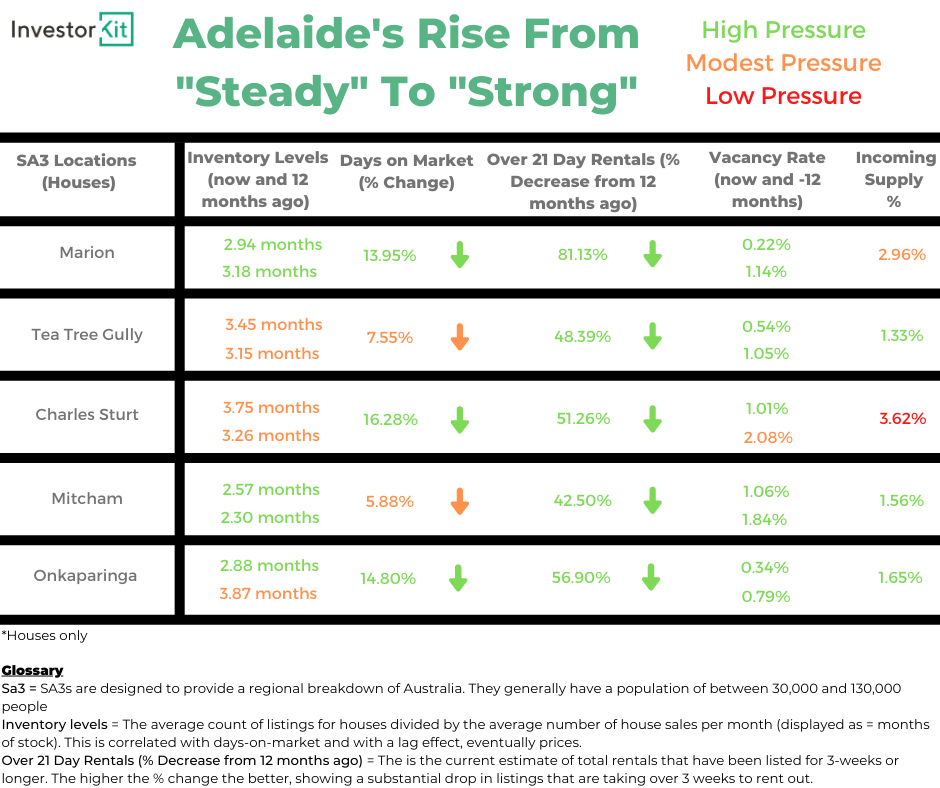
The researcher pointed to the high proportion of owner-occupiers that are returning to the market, with many properties selling above their reserve.
“Now we are starting to move from resilience to strength,” Mr Paliwal said.
“That is clearly happening as the missing component in Australia’s property market [since COVID] has been sentiment.”
He noted that Adelaide has the traditional fundamentals that would see a housing market grow.
“If you think of Adelaide’s house market that has low supply, if you combine that with cheap money and low rates, as well as owner-occupier affordability, all of a sudden that missing component of sentiment is now starting to show in a positive way in Adelaide,” the researcher said.
He also pointed to success on the COVID front – growing property prices in regions that otherwise would have struggled.
“What has been very interesting is the region of Marion was expected to see some negative impacts,” Mr Paliwal said.
“If you look at the workforce breakdown, 11 per cent of workers in Marion are in the retail trade, 10 per cent of workers in education and training, as well as 8 per cent in accommodation and food services.
“One in three workers [was] in the three top impacted areas if you include the education sector with the university in Marion.
“So, this just shows despite facing headwinds, it has remained resilient despite the pandemic,” Mr Paliwal concluded.
About the author
About the author
Property
Australia’s mortgage knife‑fight: investors, first‑home buyers and the new rules of lender competition
The mortgage market is staying hot even as rate relief remains elusive, with investors and first‑home buyers chasing scarce stock and lenders fighting for share on price, speed and digital experienceRead more
Property
Breaking Australia’s three‑property ceiling: the finance‑first playbook for scalable portfolios
Most Australian investors don’t stall at three properties because they run out of ambition — they run out of borrowing capacity. The ceiling is a finance constraint disguised as an asset problem. The ...Read more
Property
Gen Z's secret weapon: Why their homebuying spree could flip Australia's housing market
A surprising share of younger Australians are preparing to buy despite affordability headwinds. One in three Gen Z Australians intend to purchase within a few years and 32 per cent say escaping rent ...Read more
Property
Tasmania’s pet-positive pivot: What landlords, BTR operators and insurers need to do now
Tasmania will soon require landlords to allow pets unless they can prove a valid reason to refuse. This is more than a tenancy tweak; it is a structural signal that the balance of power in rental ...Read more
Property
NSW underquoting crackdown: the compliance reset creating both cost and competitive edge
NSW is moving to sharply increase penalties for misleading price guides, including fines linked to agent commissions and maximum penalties up to $110,000. Behind the headlines sits a more ...Read more
Property
ANZ’s mortgage growth, profit slump: why volume without margin won’t pay the dividends
ANZ lifted home-lending volumes, yet profits fell under the weight of regulatory and restructuring costs—an object lesson in the futility of growth that doesn’t convert to margin and productivityRead more
Property
Rate pause, busy summer: where smart capital wins in Australia’s property market
With the Reserve Bank holding rates steady, the summer selling season arrives with rare predictability. Liquidity will lift, serviceability stops getting worse, and sentiment stabilises. The ...Read more
Property
The 2026 Suburb Thesis: A case study in turning trend lists into investable strategy
A new crop of ‘suburbs to watch’ is hitting headlines, but translating shortlist hype into bottom-line results requires more than a map and a mood. This case study shows how a disciplined, data-led ...Read more
Property
Australia’s mortgage knife‑fight: investors, first‑home buyers and the new rules of lender competition
The mortgage market is staying hot even as rate relief remains elusive, with investors and first‑home buyers chasing scarce stock and lenders fighting for share on price, speed and digital experienceRead more
Property
Breaking Australia’s three‑property ceiling: the finance‑first playbook for scalable portfolios
Most Australian investors don’t stall at three properties because they run out of ambition — they run out of borrowing capacity. The ceiling is a finance constraint disguised as an asset problem. The ...Read more
Property
Gen Z's secret weapon: Why their homebuying spree could flip Australia's housing market
A surprising share of younger Australians are preparing to buy despite affordability headwinds. One in three Gen Z Australians intend to purchase within a few years and 32 per cent say escaping rent ...Read more
Property
Tasmania’s pet-positive pivot: What landlords, BTR operators and insurers need to do now
Tasmania will soon require landlords to allow pets unless they can prove a valid reason to refuse. This is more than a tenancy tweak; it is a structural signal that the balance of power in rental ...Read more
Property
NSW underquoting crackdown: the compliance reset creating both cost and competitive edge
NSW is moving to sharply increase penalties for misleading price guides, including fines linked to agent commissions and maximum penalties up to $110,000. Behind the headlines sits a more ...Read more
Property
ANZ’s mortgage growth, profit slump: why volume without margin won’t pay the dividends
ANZ lifted home-lending volumes, yet profits fell under the weight of regulatory and restructuring costs—an object lesson in the futility of growth that doesn’t convert to margin and productivityRead more
Property
Rate pause, busy summer: where smart capital wins in Australia’s property market
With the Reserve Bank holding rates steady, the summer selling season arrives with rare predictability. Liquidity will lift, serviceability stops getting worse, and sentiment stabilises. The ...Read more
Property
The 2026 Suburb Thesis: A case study in turning trend lists into investable strategy
A new crop of ‘suburbs to watch’ is hitting headlines, but translating shortlist hype into bottom-line results requires more than a map and a mood. This case study shows how a disciplined, data-led ...Read more