




Invest
Cost, red tape and capital: why Australia’s housing pipeline is shrinking — and how to rebuild it
Invest
Cost, red tape and capital: why Australia’s housing pipeline is shrinking — and how to rebuild it
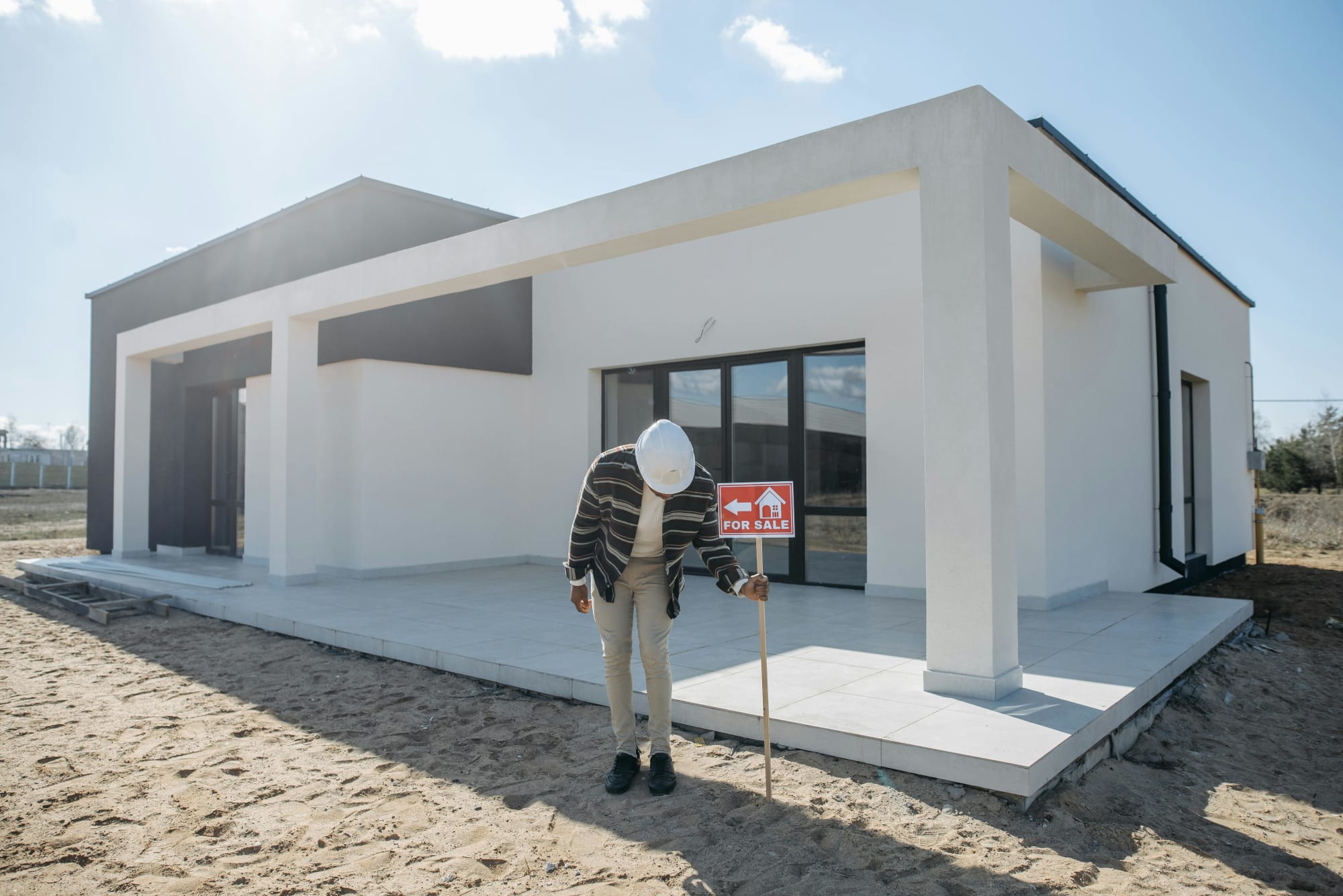
Australia’s housing pipeline is being choked by a toxic mix of escalating input costs, regulatory drag and tighter finance. The result: mid-market projects stall while luxury builds proceed, pushing prices higher and locking more renters out. This is no longer a cyclical blip; it’s a structural productivity and cost-of-capital problem with 2026 shaping up as another constrained year. Business leaders that can compress cost, cycle time and risk will capture share — particularly in build-to-rent and premium segments.
Cost, red tape and capital: why Australia’s housing pipeline is shrinking — and how to rebuild it

Australia’s housing pipeline is being choked by a toxic mix of escalating input costs, regulatory drag and tighter finance. The result: mid-market projects stall while luxury builds proceed, pushing prices higher and locking more renters out. This is no longer a cyclical blip; it’s a structural productivity and cost-of-capital problem with 2026 shaping up as another constrained year. Business leaders that can compress cost, cycle time and risk will capture share — particularly in build-to-rent and premium segments.

Here’s the uncomfortable truth: in today’s cost and capital environment, only projects with thick margins or advantaged finance are viable. That is why the entry-level apartment buyer is disappearing from developer feasibilities while premium builds still break ground. As Real Estate Business reported, “we’re seeing an exodus of first-time buyers from the apartment market. The only projects still proceeding are luxury builds.” The economics explain the pipeline.
Cost stack reality: a PESTLE view of why feasibilities no longer pencil
Developers’ models face simultaneous shocks across the PESTLE spectrum:
- Political/regulatory: Protracted approvals and compliance layers add months and carrying costs. Industry commentary consistently flags “red tape” as a time and cost multiplier that erodes contingency.
- Economic: The post‑pandemic surge in materials and labour costs remains embedded. Mortgage Professional Australia signalled as early as 2022 that rising costs would suppress new building volumes; fast forward, and that warning has materialised in delayed starts and cancelled projects.
- Social: Demographic pressure (migration and household formation) collides with reduced supply responsiveness, exacerbating affordability stress.
- Technological: Construction digitisation lags other sectors; productivity gains have not offset cost inflation.
- Legal: Contract risk allocation (fixed-price legacies, liquidated damages) has moved many contractors to demand escalation clauses, lifting sponsor risk premiums.
- Environmental: Sustainability and code upgrades are essential but add upfront cost without immediate price recovery in the mid-market.
When you layer in the higher cost of capital, viability pivots from marginal to negative. Put simply, capitalised interest on longer, riskier programs kills mid-market yield.
Market dynamics: a Five Forces lens on residential construction
- Supplier power: Concentrated supply in key trades and materials keeps prices elevated. Labour shortages compound it, particularly for skilled roles.
- Buyer power: End-buyer price sensitivity is high in the mass market; developers can’t pass through full cost increases without crushing demand.
- Threat of substitutes: Renovations and deferrals act as substitutes to new stock, further weakening mid-market pre-sales.
- New entrants: Barriers to entry have risen with finance, compliance and insurance requirements, entrenching incumbents and advantaging vertically integrated players.
- Competitive rivalry: Land-heavy developers with balance sheet strength pivot to premium and build-to-rent (BTR), where yields and holding strategies are more resilient.
The centre of the market is where margin is thinnest and risk is highest. That’s why the pipeline skews to premium stock — the only segment absorbing the cost stack.
Business impact and ROI calculus: where capital flows, cranes follow
For lenders, the hurdle rate has shifted. Higher risk premiums, tougher pre‑sales thresholds and stricter covenants reduce available credit for mid-market developments. For sponsors, the ROI decision points are stark:
- Timing risk: Each month of approval and procurement delay compounds interest expense and materials volatility.
- Price elasticity: Mid-market buyers cannot absorb 10–20% cost inflation; premium buyers often can, preserving margin.
- Asset strategy: BTR can spread development risk over longer hold horizons while addressing rental demand, though yields must clear debt costs.
Global parallels reinforce the pattern. In the United States, new home sales fell in 2025 as higher borrowing costs bit, even as materials pressures eased in places. Australia’s challenge is a double bind: elevated input costs and stubborn approval timelines. Deloitte’s Weekly Economic Briefing in March 2025 summed it up: “deep-rooted challenges within the construction industry continue to stifle housing supply growth.”
Implementation playbook: compress cost, time and risk
Winning strategies are operational, contractual and financial:
- Standardise and simplify: Repeatable designs and standard components reduce rework, shorten approvals, and strengthen procurement power.
- Offsite and modular: Shifting labour into controlled environments mitigates weather and site risk and improves quality assurance. It also enables more reliable schedules — critical when capital costs are high.
- Alliance contracting and early contractor involvement (ECI): Shared-risk models align incentives around cost transparency and schedule discipline, reducing disputes and contingency stacking.
- Hedging and indexed contracts: Materials price hedges and escalation clauses matched to recognised indices de-risk budgets and make projects bankable again.
- Portfolio-driven procurement: Aggregating demand across multiple projects unlocks volume discounts and secures scarce trades.
- Data discipline: Cost and schedule benchmarking, variance analytics, and stage-gate governance prevent scope creep and protect contingency.
Technology and AI: productivity is the only durable antidote to cost inflation
Australia’s AI ecosystem has momentum but a commercialisation gap, according to a June 2025 analysis of the sector. The opportunity for construction is practical, not speculative: deploy AI and advanced analytics to attack waste in design and delivery.
- Preconstruction: AI-assisted design and quantity take‑offs can reduce errors and compress value-engineering cycles. Parametric tools quickly test cost/constructability trade-offs against code constraints.
- Scheduling: Machine learning forecasts identify bottlenecks and weather or supply risk earlier, enabling proactive resequencing.
- Compliance: Natural language processing tools can map evolving code and planning conditions to standard templates, cutting approval documentation time.
- Quality and safety: Computer vision on site improves defect detection and safety compliance, lowering rework and insurance costs.
Guardrails exist for responsible deployment: the Australian Government’s AI Ethics Principles provide a governance baseline, and agencies like the ATO have published frameworks distinguishing general-purpose AI from domain use — useful reference points for builders and developers standing up AI programs. The constraint is not policy; it’s execution and integration into core workflows.
Policy and workforce: necessary but insufficient levers
Policy signals are encouraging but small relative to the gap. The Northern Australia Action Plan 2024–2029 earmarks $88.8 million over three years to expand the construction workforce and support supply. Fee‑Free TAFE helps, yet capacity and productivity must both rise to bend the cost curve.
Two pragmatic regulatory moves would have outsized impact:
- Streamlined approvals with statutory time limits and digital lodgement, using common assessment templates to reduce variability across councils.
- Nationally harmonised codes for standardised medium-density typologies, enabling scale manufacturing and faster compliance checks.
Without cycle‑time certainty, the cost of capital will continue to price out mid-market projects, regardless of subsidies.
Outlook for 2026: scenarios and signals to watch
- Base case: Costs remain elevated and permissions slow; premium and BTR dominate commencements, mid-market volumes stay subdued. Rent growth persists as supply lags.
- Reform case: Targeted planning reforms and wider uptake of modular/AI tools trim 10–15% from program timelines, improving bankability for select mid-market projects.
- Downside case: A further tightening of credit or contractor insolvencies trigger widespread project deferrals.
Signals to monitor: tender coverage ratios in major metros; approval cycle times; subcontractor insolvency data; escalation clauses prevalence; and lender pre‑sales thresholds. If these indicators improve concurrently, the mid-market pipeline can re-open.
Strategic moves now
Developers: rationalise pipelines around standardised product, lock in alliance partners, and negotiate index-linked contracts. Investors and lenders: back sponsors demonstrating schedule certainty via offsite and data-led delivery, and consider BTR platforms with operational capability. Builders: invest in AI-enabled estimating/scheduling and offsite capacity. Policymakers: prioritise approval certainty over one-off subsidies.
The housing supply squeeze is, at its core, a productivity and risk problem. The firms that industrialise delivery and de-risk capital — not just wait for cheaper inputs — will be the ones still building when the market turns.
RELATED ARTICLES

Property
Multigenerational living is moving mainstream: how agents, developers and lenders can monetise the shift
Australia’s quiet housing revolution is no longer a niche lifestyle choice; it’s a structural shift in demand that will reward property businesses prepared to redesign product, pricing and ...Read more

Property
Prestige property, precision choice: a case study in selecting the right agent when millions are at stake
In Australia’s top-tier housing market, the wrong agent choice can quietly erase six figures from a sale. Privacy protocols, discreet buyer networks and data-savvy marketing have become the new ...Read more

Property
From ‘ugly’ to alpha: Turning outdated Australian homes into high‑yield assets
In a tight listings market, outdated properties aren’t dead weight—they’re mispriced optionality. Agencies and vendors that industrialise light‑touch refurbishment, behavioural marketing and ...Read more

Property
The 2026 Investor Playbook: Rental Tailwinds, City Divergence and the Tech-Led Operations Advantage
Rental income looks set to do the heavy lifting for investors in 2026, but not every capital city will move in lockstep. Industry veteran John McGrath tips a stronger rental year and a Melbourne ...Read more

Property
Prestige property, precision choice: Data, discretion and regulation now decide million‑dollar outcomes
In Australia’s prestige housing market, the selling agent is no longer a mere intermediary but a strategic supplier whose choices can shift outcomes by seven figures. The differentiators are no longer ...Read more

Property
The new battleground in housing: how first-home buyer policy is reshaping Australia’s entry-level market
Government-backed guarantees and stamp duty concessions have pushed fresh demand into the bottom of Australia’s price ladder, lifting values and compressing selling times in entry-level segmentsRead more
Property
Property 2026: Why measured moves will beat the market
In 2026, Australian property success will be won by investors who privilege resilience over velocity. The market is fragmenting by suburb and asset type, financing conditions remain tight, and ...Read more

Property
Entry-level property is winning: How first home buyer programs are reshaping demand, pricing power and strategy
Lower-priced homes are appreciating faster as government support channels demand into the entry tier. For developers, lenders and marketers, this is not a blip—it’s a structural reweighting of demand ...Read more
Property
Multigenerational living is moving mainstream: how agents, developers and lenders can monetise the shift
Australia’s quiet housing revolution is no longer a niche lifestyle choice; it’s a structural shift in demand that will reward property businesses prepared to redesign product, pricing and ...Read more
Property
Prestige property, precision choice: a case study in selecting the right agent when millions are at stake
In Australia’s top-tier housing market, the wrong agent choice can quietly erase six figures from a sale. Privacy protocols, discreet buyer networks and data-savvy marketing have become the new ...Read more
Property
From ‘ugly’ to alpha: Turning outdated Australian homes into high‑yield assets
In a tight listings market, outdated properties aren’t dead weight—they’re mispriced optionality. Agencies and vendors that industrialise light‑touch refurbishment, behavioural marketing and ...Read more
Property
The 2026 Investor Playbook: Rental Tailwinds, City Divergence and the Tech-Led Operations Advantage
Rental income looks set to do the heavy lifting for investors in 2026, but not every capital city will move in lockstep. Industry veteran John McGrath tips a stronger rental year and a Melbourne ...Read more
Property
Prestige property, precision choice: Data, discretion and regulation now decide million‑dollar outcomes
In Australia’s prestige housing market, the selling agent is no longer a mere intermediary but a strategic supplier whose choices can shift outcomes by seven figures. The differentiators are no longer ...Read more
Property
The new battleground in housing: how first-home buyer policy is reshaping Australia’s entry-level market
Government-backed guarantees and stamp duty concessions have pushed fresh demand into the bottom of Australia’s price ladder, lifting values and compressing selling times in entry-level segmentsRead more
Property
Property 2026: Why measured moves will beat the market
In 2026, Australian property success will be won by investors who privilege resilience over velocity. The market is fragmenting by suburb and asset type, financing conditions remain tight, and ...Read more
Property
Entry-level property is winning: How first home buyer programs are reshaping demand, pricing power and strategy
Lower-priced homes are appreciating faster as government support channels demand into the entry tier. For developers, lenders and marketers, this is not a blip—it’s a structural reweighting of demand ...Read more