Invest
75% value growth in 5 years: Can you guess where?
A 75 per cent increase in the median house price in one council area has landed it the title of Australia’s “best-performing property market” for the past five years.
75% value growth in 5 years: Can you guess where?
A 75 per cent increase in the median house price in one council area has landed it the title of Australia’s “best-performing property market” for the past five years.
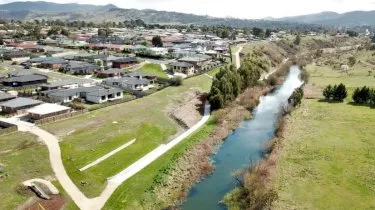
Hobart’s municipality of Brighton has been crowned best in the country in the five years to December 2019, according to analysis from Propertyology.
For Propertyology’s head of research, Simon Pressley, the analysis is “yet another piece of compelling evidence that confirms population growth is far from the biggest influence on property market performance”.
It’s population grew by just 9.2 per cent over the same period.
Not only does it bust the population myth, but also defies the commonly held belief that “capital cities are better performers than non-capitals”, Mr Pressley said.
With respect to improving property prices, it beat out two other Tasmanian localities for the top spot – Hobart City was the runner-up, recording median house price value growth of 62 per cent.
The island state also saw a strong performance from Glenorchy, which saw a 58 per cent increase to its median house price.
Looking more broadly across the nation, strong performances were seen in regional Victoria’s Hepburn and Alpine, which saw 60 per cent increases to their own median house prices.
Not far behind was Melbourne’s Brimbank and Sydney’s Mosman – where a 57 per cent increase in each area’s median house price occurred over the same period.
He pointed to strong house price performances from regional municipalities including Mitchell (Vic), Snowy Monaro (NSW), Wingecarribee (NSW), Lithgow (NSW), Noosa (Qld), Kempsey (NSW), Byron (NSW), George Town (Tas) and Shoalhaven (NSW), where median house price growth between 45 and 51 per cent was recorded.
But again, these markets have defied a requirement for population growth.
“In most cases, their respective population growth rates were below the 7.9 percent five-year national average,” Mr Pressley stated.
On the other end of the spectrum, the researcher revealed that out of more than 500 city councils all over Australia, the Western Australian municipality of Serpentine-Jarrahdale had the third highest population growth rate (37.5 percent) over the last five years – more than quadruple the national average.
But in that region, the median house price saw a 21 per cent decline in property prices over the same period.
About the author
About the author
Property
The new battleground in housing: how first-home buyer policy is reshaping Australia’s entry-level market
Government-backed guarantees and stamp duty concessions have pushed fresh demand into the bottom of Australia’s price ladder, lifting values and compressing selling times in entry-level segmentsRead more
Property
Property 2026: Why measured moves will beat the market
In 2026, Australian property success will be won by investors who privilege resilience over velocity. The market is fragmenting by suburb and asset type, financing conditions remain tight, and ...Read more
Property
Entry-level property is winning: How first home buyer programs are reshaping demand, pricing power and strategy
Lower-priced homes are appreciating faster as government support channels demand into the entry tier. For developers, lenders and marketers, this is not a blip—it’s a structural reweighting of demand ...Read more
Property
Scarcity premiums, squeezed yields: Australia’s housing bottleneck is rewriting investor strategy
Australia’s housing pipeline has thinned to a decade low, locking in a scarcity premium that narrows investor flexibility, compresses yields and extends hold periods. With only 172,000 dwellings ...Read more
Property
Australia’s housing bottleneck isn’t a demand problem — it’s a construction maths problem
The economics of building have broken for mainstream housing in Australia. Input costs, labour scarcity and approvals drag are collapsing project feasibility, tilting capital to luxury builds and ...Read more
Property
2026 property expansion? Why disciplined investors will wait — and where to play offence
A growing chorus of market practitioners is urging investors to pause portfolio expansion in 2026 as returns compress and policy settings tighten. The headline risk is less about price crashes and ...Read more
Property
Cost, red tape and capital: why Australia’s housing pipeline is shrinking — and how to rebuild it
Australia’s housing pipeline is being choked by a toxic mix of escalating input costs, regulatory drag and tighter finance. The result: mid-market projects stall while luxury builds proceed, pushing ...Read more
Property
Start 2026 strong: Turn property advice into a data-driven advantage
In 2026, property professionals who industrialise goal-setting and risk management with data and AI will capture outsized client value. The playbook is shifting from intuitive advice to measurable, ...Read more
Property
The new battleground in housing: how first-home buyer policy is reshaping Australia’s entry-level market
Government-backed guarantees and stamp duty concessions have pushed fresh demand into the bottom of Australia’s price ladder, lifting values and compressing selling times in entry-level segmentsRead more
Property
Property 2026: Why measured moves will beat the market
In 2026, Australian property success will be won by investors who privilege resilience over velocity. The market is fragmenting by suburb and asset type, financing conditions remain tight, and ...Read more
Property
Entry-level property is winning: How first home buyer programs are reshaping demand, pricing power and strategy
Lower-priced homes are appreciating faster as government support channels demand into the entry tier. For developers, lenders and marketers, this is not a blip—it’s a structural reweighting of demand ...Read more
Property
Scarcity premiums, squeezed yields: Australia’s housing bottleneck is rewriting investor strategy
Australia’s housing pipeline has thinned to a decade low, locking in a scarcity premium that narrows investor flexibility, compresses yields and extends hold periods. With only 172,000 dwellings ...Read more
Property
Australia’s housing bottleneck isn’t a demand problem — it’s a construction maths problem
The economics of building have broken for mainstream housing in Australia. Input costs, labour scarcity and approvals drag are collapsing project feasibility, tilting capital to luxury builds and ...Read more
Property
2026 property expansion? Why disciplined investors will wait — and where to play offence
A growing chorus of market practitioners is urging investors to pause portfolio expansion in 2026 as returns compress and policy settings tighten. The headline risk is less about price crashes and ...Read more
Property
Cost, red tape and capital: why Australia’s housing pipeline is shrinking — and how to rebuild it
Australia’s housing pipeline is being choked by a toxic mix of escalating input costs, regulatory drag and tighter finance. The result: mid-market projects stall while luxury builds proceed, pushing ...Read more
Property
Start 2026 strong: Turn property advice into a data-driven advantage
In 2026, property professionals who industrialise goal-setting and risk management with data and AI will capture outsized client value. The playbook is shifting from intuitive advice to measurable, ...Read more