Invest
Frydenberg promises jobs and services budget
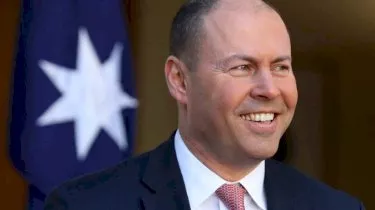
The federal Treasurer has announced the budget will put jobs at the forefront, with fiscal repair likely to be put on the backburner, as the country looks to recover from the first economic downturn in nearly three decades.
Frydenberg promises jobs and services budget
The federal Treasurer has announced the budget will put jobs at the forefront, with fiscal repair likely to be put on the backburner, as the country looks to recover from the first economic downturn in nearly three decades.
In an interview on 3AW, Treasurer Josh Frydenberg flagged the strong data coming out of the IMF and the improving labour figures, although pointed out the need to encourage business and consumer spending.
Mr Frydenberg declared the confidence in the nation, particularly in businesses, is leading to economic recovery that is faster than expected, although faces challenges in view of the vaccine rollout.
The Treasurer said that the budget on 11 May would include the commitment to get people into jobs over fiscal repair, with around 1.35 million Australians still relying on government services including JobSeeker.
The Treasurer noted stats released by the Australian Bureau of Statistics (ABS) which show that Australia’s unemployment rate dropped to 5.6 from 5.8 per cent last month, highlighting the economic recovery was better than markets expected.
Seasonally adjusted employment increased by 71,000 people between February and March 2021, according to ABS data.
Prior to the release of the official figures, Commonwealth Bank CEO Matt Comyn said CBA’s economics team is expecting falls in unemployment to continue, with the unemployment rate reaching 5 per cent by the end of the calendar year and to 4.7 per cent by the end of 2022.
“The recovery in the labour market is, in one word, miraculous,” Mr Comyn said.
Mr Frydenberg explained the Australian economy needed to continue this momentum, with next month’s budget targeted towards jobs and services.
“In this budget, we will have an emphasis on skills, on meeting the workforce shortages, age care is going to be a major feature as well,” Mr Frydenberg said on 3AW radio.
“We are going to focus on the essential services that we can guarantee as well as maintain the wonderful momentum in the jobs market.”
The Treasurer also pointed to data from the IMF, which saw Australia’s economy back to the same position it was a year ago when the March figures were released.
The IMF’s latest economic outlook sees the Australian economy expanding by 4.5 per cent this year, up by 1 per cent on its January predictions following a contraction of 2.4 per cent in 2020.
In upgrading its outlook, the IMF noted that the “Australian economy continues to show a strong recovery momentum” and that a “favourable labour market recovery continues to support a strong rebound in private consumption, added by wealth effects from rising house prices”.
About the author
About the author
Economy
Australia’s spending surprise raises the odds of a February rate move — here’s how to protect margin and momentum
Household outlays are running hotter than economists expected, with the latest ABS readings showing broad-based gains across services and goods. That resilience is exactly the kind of demand impulse ...Read more
Economy
Australia’s inflation cools to 3.4% — why the RBA’s next move still isn’t a lay‑up for business
Headline inflation easing is good optics; balance sheets feel something different. With year‑on‑year CPI down to 3.4% in November from 3.8%, hopes for rate relief are rising — but policymakers remain ...Read more
Economy
Inflation cools to 3.4% — but the RBA’s reaction function keeps businesses on a knife-edge
Australia’s headline CPI edged down to 3.4% year-on-year in November, from 3.8%, easing immediate pressure but not eliminating the risk of further tightening. With services inflation sticky and ...Read more
Economy
Higher-for-longer, not higher forever: How Australia’s inflation ‘surprise’ is rewriting CFO playbooks for 2026
Australia’s latest inflation pulse eased but didn’t budge bank outlooks: near‑term rate cuts are still a long shot, with some houses flagging upside risk. That steadier‑for‑longer cash rate is pushing ...Read more
Economy
Australia's inflation illusion: the real challenge lies in pricing power and productivity
Headline inflation has cooled to 3.4% year-on-year, but the Reserve Bank’s caution—and a still‑hot housing backdrop—mean the rate threat hasn’t left the room. For boards, the next few quarters are ...Read more
Economy
When house prices lift, tills ring: A case study in turning Australia’s wealth effect into growth
Australia’s latest upswing in household wealth, anchored by higher dwelling values, is more than a feel‑good statistic—it is a profit and planning signal. The ABS notes property’s centrality to ...Read more
Economy
RBA's hawkish stance reflects inflation concerns, State Street economist comments
In a recent statement, the Reserve Bank of Australia (RBA) has signaled a hawkish stance on interest rates, drawing insights from financial experts about the implications for Australia's economic ...Read more
Economy
Navigating the inflation maze: How CFOs can outsmart economic hurdles in Australia
Fresh inflation data have cooled expectations of near-term rate cuts in Australia, intensifying pressure on margins, capital allocation and demand. Rather than wait for monetary relief that may not ...Read more
Economy
Australia’s spending surprise raises the odds of a February rate move — here’s how to protect margin and momentum
Household outlays are running hotter than economists expected, with the latest ABS readings showing broad-based gains across services and goods. That resilience is exactly the kind of demand impulse ...Read more
Economy
Australia’s inflation cools to 3.4% — why the RBA’s next move still isn’t a lay‑up for business
Headline inflation easing is good optics; balance sheets feel something different. With year‑on‑year CPI down to 3.4% in November from 3.8%, hopes for rate relief are rising — but policymakers remain ...Read more
Economy
Inflation cools to 3.4% — but the RBA’s reaction function keeps businesses on a knife-edge
Australia’s headline CPI edged down to 3.4% year-on-year in November, from 3.8%, easing immediate pressure but not eliminating the risk of further tightening. With services inflation sticky and ...Read more
Economy
Higher-for-longer, not higher forever: How Australia’s inflation ‘surprise’ is rewriting CFO playbooks for 2026
Australia’s latest inflation pulse eased but didn’t budge bank outlooks: near‑term rate cuts are still a long shot, with some houses flagging upside risk. That steadier‑for‑longer cash rate is pushing ...Read more
Economy
Australia's inflation illusion: the real challenge lies in pricing power and productivity
Headline inflation has cooled to 3.4% year-on-year, but the Reserve Bank’s caution—and a still‑hot housing backdrop—mean the rate threat hasn’t left the room. For boards, the next few quarters are ...Read more
Economy
When house prices lift, tills ring: A case study in turning Australia’s wealth effect into growth
Australia’s latest upswing in household wealth, anchored by higher dwelling values, is more than a feel‑good statistic—it is a profit and planning signal. The ABS notes property’s centrality to ...Read more
Economy
RBA's hawkish stance reflects inflation concerns, State Street economist comments
In a recent statement, the Reserve Bank of Australia (RBA) has signaled a hawkish stance on interest rates, drawing insights from financial experts about the implications for Australia's economic ...Read more
Economy
Navigating the inflation maze: How CFOs can outsmart economic hurdles in Australia
Fresh inflation data have cooled expectations of near-term rate cuts in Australia, intensifying pressure on margins, capital allocation and demand. Rather than wait for monetary relief that may not ...Read more